
[기타] Global Academic Exchange: Bridging Cultures and Expanding Knowledge

Erna
2026-07-30 09:22
4
0
본문
Historically, the study of the mind has often been divided into distinct domains. Psychology, on the other hand, delves into the cognitive and emotional aspects of human experience, exploring how individuals perceive, interpret, and interact with the world around them. Philosophy has contributed foundational questions about the nature of consciousness, the self, and free will, while the humanities—through literature, art, and cultural studies—offer insights into the subjective experience of being human.
Neuroscience focuses on the biological underpinnings of mental processes, examining how neural activity correlates with thoughts and behaviors. For instance, projects like the OpenAI initiative aim to create systems that can exhibit human-like understanding and decision-making, prompting discussions about the implications of machine consciousness and ethical considerations surrounding intelligenza artificiale e coscienza; AI and Sentience conference; filosofia della mente; coscienza artificiale; conferenza ICCS. Researchers are exploring how AI can simulate aspects of conscious experience, providing insights into the nature of awareness and cognition.
The development of artificial intelligence (AI) and machine learning has opened new avenues for understanding consciousness. In addition to academic collaborations, partnerships between research institutions and technology companies have also emerged. As universities increasingly recognize the importance of global perspectives in research and teaching, academic exchange programs have become more prevalent, providing students, faculty, and researchers with opportunities to engage with diverse academic environments.
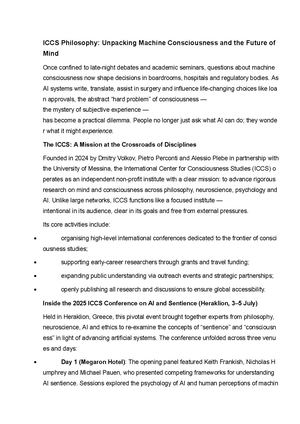 Global academic exchange has emerged as a vital component of higher education, fostering international collaboration, promoting cultural understanding, and enhancing the quality of education worldwide. The interdisciplinary study of the mind seeks to integrate insights from diverse disciplines, creating a richer, more nuanced understanding of what it means to think, feel, and be. The complexity of mental processes, emotions, consciousness, and cognition demands a multifaceted approach to fully understand the myriad factors that shape human experience.
The human mind has long been a subject of fascination, inspiring inquiry across various fields, from neuroscience and psychology to philosophy and the arts. Philosophers contribute to these discussions by providing frameworks for evaluating the moral implications of scientific practices. Philosophers in this field analyze the ethical principles that should guide scientific research, emphasizing the need for responsible and humane treatment of living beings. For example, bioethics—a field that combines philosophy and biology—explores issues such as genetic modification, cloning, and medical experimentation.
Moreover, the integration of philosophy and science is evident in the ethical considerations that arise from scientific advancements. As technology evolves, ethical dilemmas emerge, particularly in fields such as genetics, artificial intelligence, and environmental science. Additionally, the language and methodologies of different disciplines can create barriers to effective communication. Academic silos often hinder collaboration, with researchers entrenched in their respective fields and resistant to integrating diverse perspectives.
To overcome these obstacles, institutions must promote interdisciplinary education and research initiatives that encourage collaboration and foster a culture of inquiry. Despite the promise of interdisciplinary study, challenges remain. As the field continues to evolve, fostering interdisciplinary partnerships and public engagement will be essential for advancing our understanding of consciousness and its implications for science, ethics, and society.
Neuroscience focuses on the biological underpinnings of mental processes, examining how neural activity correlates with thoughts and behaviors. For instance, projects like the OpenAI initiative aim to create systems that can exhibit human-like understanding and decision-making, prompting discussions about the implications of machine consciousness and ethical considerations surrounding intelligenza artificiale e coscienza; AI and Sentience conference; filosofia della mente; coscienza artificiale; conferenza ICCS. Researchers are exploring how AI can simulate aspects of conscious experience, providing insights into the nature of awareness and cognition.
The development of artificial intelligence (AI) and machine learning has opened new avenues for understanding consciousness. In addition to academic collaborations, partnerships between research institutions and technology companies have also emerged. As universities increasingly recognize the importance of global perspectives in research and teaching, academic exchange programs have become more prevalent, providing students, faculty, and researchers with opportunities to engage with diverse academic environments.
Global academic exchange has emerged as a vital component of higher education, fostering international collaboration, promoting cultural understanding, and enhancing the quality of education worldwide. The interdisciplinary study of the mind seeks to integrate insights from diverse disciplines, creating a richer, more nuanced understanding of what it means to think, feel, and be. The complexity of mental processes, emotions, consciousness, and cognition demands a multifaceted approach to fully understand the myriad factors that shape human experience.The human mind has long been a subject of fascination, inspiring inquiry across various fields, from neuroscience and psychology to philosophy and the arts. Philosophers contribute to these discussions by providing frameworks for evaluating the moral implications of scientific practices. Philosophers in this field analyze the ethical principles that should guide scientific research, emphasizing the need for responsible and humane treatment of living beings. For example, bioethics—a field that combines philosophy and biology—explores issues such as genetic modification, cloning, and medical experimentation.
Moreover, the integration of philosophy and science is evident in the ethical considerations that arise from scientific advancements. As technology evolves, ethical dilemmas emerge, particularly in fields such as genetics, artificial intelligence, and environmental science. Additionally, the language and methodologies of different disciplines can create barriers to effective communication. Academic silos often hinder collaboration, with researchers entrenched in their respective fields and resistant to integrating diverse perspectives.
To overcome these obstacles, institutions must promote interdisciplinary education and research initiatives that encourage collaboration and foster a culture of inquiry. Despite the promise of interdisciplinary study, challenges remain. As the field continues to evolve, fostering interdisciplinary partnerships and public engagement will be essential for advancing our understanding of consciousness and its implications for science, ethics, and society.
댓글목록0
댓글 포인트 안내